Omaha's expansion westward from the Missouri River bluffs into the loess-mantled uplands created distinct geotechnical challenges that engineers still manage today. The city sits on deep deposits of Peoria Loess, a wind-blown silt that behaves well when dry but loses strength dramatically with moisture. Near the Old Market and downtown, alluvial clays from the Missouri River floodplain add complexity, requiring precise classification for any foundation design. The Atterberg limits test defines the moisture boundaries where these fine-grained soils transition from solid to plastic to liquid states. For projects across Omaha, from Midtown Crossing redevelopments to industrial sites near Eppley Airfield, understanding the liquid limit and plastic limit of native soils prevents costly excavation surprises and guides the selection of appropriate foundation types. We run these tests in our ISO 17025-accredited lab, following ASTM D4318-17 procedures, and often pair them with grain-size analysis to separate the silt and clay fractions that dominate local formations.
The plasticity index of Omaha's Peoria Loess directly correlates with collapse potential under saturated conditions, a relationship documented across decades of Nebraska geotechnical research.
Methodology and scope
Local considerations
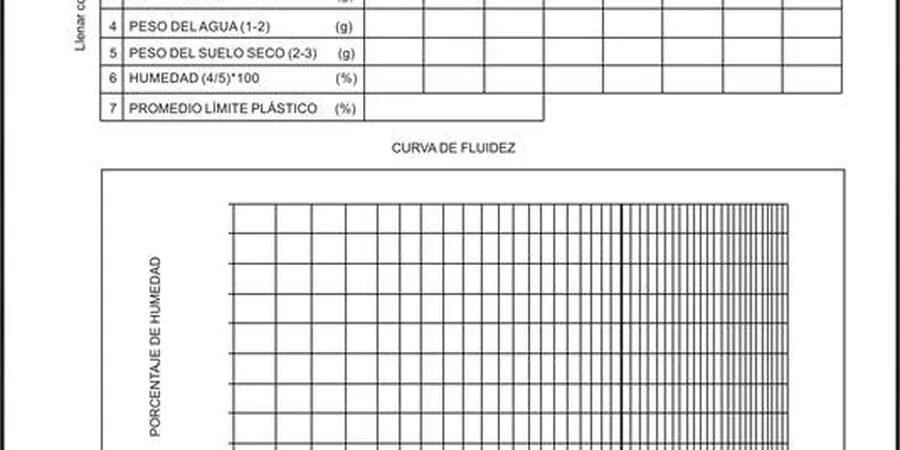
The brass Casagrande cup we use in our Omaha lab is calibrated daily to ensure the 10 mm drop height meets ASTM tolerances. The technician adjusts the grooving tool to cut a clean 2 mm-wide channel through the soil paste, then counts the blows until the groove closes over 13 mm in length. This repetitive, manual process requires steady hands and consistent technique, because a deviation of even one blow at the critical range of 25 impacts the liquid limit result. Most failures we see in the field stem from contractors or engineers skipping this test on silty soils that appear stable at their natural moisture content. Omaha's loess typically holds vertical cuts beautifully when dry, but a water line leak or heavy rain can trigger rapid strength loss if the moisture content approaches the liquid limit. We have observed plasticity indices below 5 in some western Douglas County loess sites, where the soil transitions quickly from semi-solid to liquid with little warning. This narrow plastic range leaves zero margin for construction traffic or excavation in wet weather.
Applicable standards
ASTM D4318-17, ASTM D2487-17 (USCS), AASHTO T-89 and T-90, ASTM D2216 (moisture content companion)
Associated technical services
Liquid Limit, Plastic Limit & Plasticity Index
Complete Atterberg limits per ASTM D4318-17 using the multipoint liquid limit method. We test the fraction passing the No. 40 sieve, report LL, PL, PI, and classify the soil per USCS. Suitable for foundation investigations, embankment quality control, and forensic evaluations of expansive clay damage across the Omaha metro.
Combined Classification Package
Atterberg limits plus sieve and hydrometer analysis for full ASTM D2487 classification. Includes natural moisture content and organic content when requested. This package provides the complete grain-size distribution and plasticity data needed for bearing capacity calculations and settlement analysis, particularly useful for Missouri River floodplain sites in eastern Douglas County.
Typical parameters
Frequently asked questions
How much do Atterberg limits tests cost in Omaha?
Atterberg limits testing (liquid limit and plastic limit) typically runs between US$70 and US$100 per sample when performed individually. Pricing drops when bundled with a full classification suite or included as part of a larger geotechnical investigation with multiple samples.
What is the difference between liquid limit and plastic limit?
The liquid limit is the moisture content at which soil changes from plastic to liquid behavior, determined by the Casagrande cup method. The plastic limit is the moisture content where the soil begins to crumble when rolled into 3.2 mm threads. The difference between them is the plasticity index, which indicates the range of moisture over which the soil behaves plastically.
Why do Omaha's loess soils need Atterberg limits testing?
Omaha sits on thick deposits of Peoria Loess, a silty soil that exhibits metastable behavior. Atterberg limits help predict collapse potential upon wetting and guide foundation design. The plasticity index of local loess typically falls between 5 and 15, but even low-plasticity silts can lose all strength when saturated, making this test essential for any construction on undisturbed loess.
How long does the test take?
Standard turnaround is 2 to 3 business days from sample receipt. The test requires oven-drying for moisture content determination, which is the primary time constraint. Expedited same-day or next-day results are available for active construction sites encountering unexpected soil conditions.
What sample quantity do you need for Atterberg limits?
We need approximately 300 grams of material passing the No. 40 sieve. For undisturbed samples, a standard 76 mm Shelby tube provides sufficient material. If only bag samples are available, 1 to 2 kg of representative soil allows us to process and select the appropriate fraction for testing.