Wind-driven loess and clay-rich glacial till define most of Omaha’s subgrade. When a contractor east of 72nd Street calls us after a failed density check, the first thing we pull is the Proctor curve—because if the lab maximum dry density doesn’t match the site’s actual soil, no amount of rolling will hit 95 percent. We run both Standard (ASTM D698) and Modified (ASTM D1557) Proctor tests in our Omaha lab, using material sampled directly from the cut or borrow source. The difference between the two methods is roughly 12,000 ft-lbf/ft³ of compactive effort, and choosing the wrong one for a structural fill under a slab-on-grade can leave you 5 to 8 percent short on bearing. Before we compact anything, we often correlate results with a sand cone density check in the field, and for deeper bearing layers we may validate stratigraphy with SPT drilling to confirm the fill profile matches design assumptions.
A one-percent deviation from optimum moisture in Omaha loess can cost you 3 pcf of dry density—enough to fail a nuclear gauge test on a 12-inch lift.
Methodology and scope
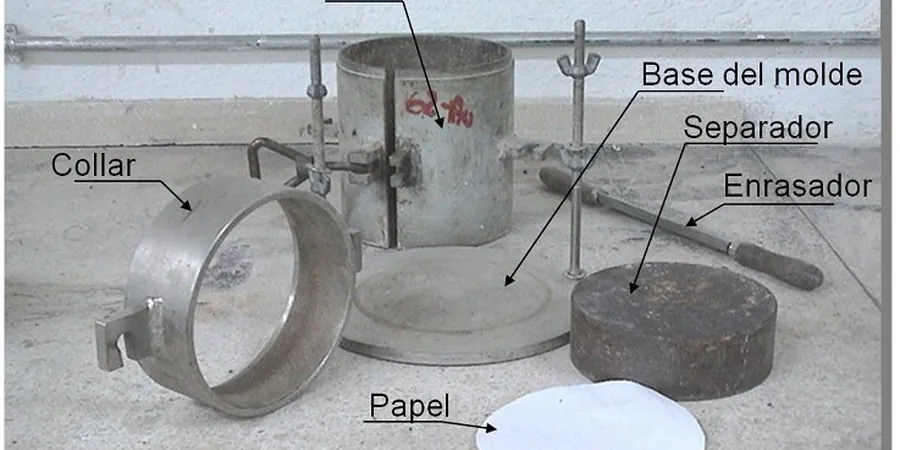
Local considerations
We inspected a commercial pad near the Elkhorn River where the geotechnical report specified Modified Proctor at 98 percent relative compaction for the building footprint. The earthwork sub brought fill from an on-site cut that turned out to be lean clay with silt seams—lab optimum was 114 pcf at 14.5 percent moisture. A week of August heat dried the stockpile faster than the water truck could keep up, and the first round of nuclear density tests came back at 89 to 91 percent. The contractor had to scarify, re-water, and re-compact roughly 3,200 cubic yards before the slab pour could proceed. That delay cost more in equipment standby than the entire testing budget. In Omaha’s freeze-thaw zone—Douglas County sees 30 to 40 cycles per winter—compaction below 95 percent lets ice lenses form in the upper 18 inches, heaving slab corners by March. A properly run Proctor test is the cheapest insurance against that scenario.
Explanatory video
Applicable standards
ASTM D698-12(2021) – Standard Proctor, ASTM D1557-12(2021) – Modified Proctor, ASTM D4718-15(2020) – Oversize Correction, ASTM D2216 – Moisture Content, Nebraska Department of Transportation – NDOT 2024 Standard Specs, Section 203
Associated technical services
Standard Proctor (ASTM D698)
Used for landscaping fills, low-rise residential pads, and utility trench backfill in Omaha subdivisions. The 12,400 ft-lbf/ft³ effort matches the compaction achievable with typical job-site equipment like a walk-behind or light smooth-drum roller.
Modified Proctor (ASTM D1557)
Specified for structural fill under commercial slabs, NDOT road subgrade, and airport pavement sections. The 56,000 ft-lbf/ft³ effort simulates heavy vibratory rollers and sheepsfoot compactors. We calibrate the curve to the exact borrow source, not a regional average.
Typical parameters
Frequently asked questions
How much does a Proctor test cost in Omaha?
A single-point Proctor curve (Standard or Modified) typically runs between US$90 and US$190, depending on whether we need to run oversize correction, perform multiple moisture points for a full curve, or expedite the report for same-day earthwork approval.
Which Proctor method should I use for a driveway or garage slab in Omaha?
For most residential slabs in Douglas and Sarpy counties, Standard Proctor referenced to 95 percent relative compaction is sufficient—unless the geotechnical report specifically calls for Modified due to expansive clay or fill deeper than 24 inches. We always match the method to the project specification, not a rule of thumb.
How long does it take to get Proctor test results?
Standard turnaround is 24 to 48 hours once the sample arrives at our lab. If you are on a tight pour schedule—say a morning mud order and you just opened the cut the previous afternoon—we can run an expedited curve with three moisture points and have the maximum dry density and optimum moisture to you same day.
Do you need a new Proctor if the fill material changes during the job?
Yes, absolutely. Even a shift from tan loess to gray glacial till on the same Omaha site can change optimum moisture by 3 to 5 points and maximum dry density by 6 to 10 pcf. We recommend a new Proctor any time the visual soil classification, color, or plasticity changes noticeably in the cut.