The quickest way to blow a construction budget in Omaha is to assume the soil will behave like it does 50 miles west in Lincoln. We see it all the time: a contractor puts down a standard footing based on generic tables, and two winters later the frost heave cracks the slab. Omaha sits on deep loess deposits over glacial till, with pockets of expansive clay along the Missouri River valleys. The bearing capacity can swing from decent to marginal within the same lot. Our test pits work and lab index testing give us the real numbers before a single yard of concrete is poured. That upfront data determines whether a conventional spread footing works or if you need to look at mat foundations to bridge softer zones. A solid shallow foundation design here starts with understanding the Pleistocene geology under your site, not a textbook assumption.
Omaha's loess doesn't fail loudly. It fails by slow settlement you only notice when doors stop closing right.
Methodology and scope
Local considerations
Omaha's expansion eastward from the original riverfront plat in the 1850s means we now build on land that was never considered prime. The older core sits on competent glacial till, but the newer subdivisions stretch into loess-mantled hills and alluvial fills with undocumented compaction. A shallow foundation design that ignores this history risks differential settlement between cut and fill sections of the same building pad. The other chronic issue is drainage. The rolling topography concentrates runoff against foundation walls, softening the bearing stratum over time. When we combine a geotechnical investigation with foundation design, we map those micro-drainage patterns and adjust the footing elevation accordingly. The cost of a liquefaction screening is also worth discussing for sites with a high water table near the Missouri River, even for shallow foundations, because the 2011 floodplain remapping changed the risk profile for a lot of commercial parcels.
Explanatory video
Applicable standards
IBC 2021 Chapter 18 (Soils and Foundations), ASCE 7-22 Minimum Design Loads for Buildings, ASTM D2487-17e1 (USCS soil classification), ASTM D4318-17e1 (Atterberg limits), ASTM D698-12(2021) (Standard Proctor)
Associated technical services
Bearing Capacity and Settlement Analysis
We calculate net allowable bearing pressure using Vesic or Terzaghi methods, calibrated with local SPT N-values and lab strength data. Settlement predictions include immediate, consolidation, and creep components specific to Omaha loess.
Footing and Mat Foundation Design
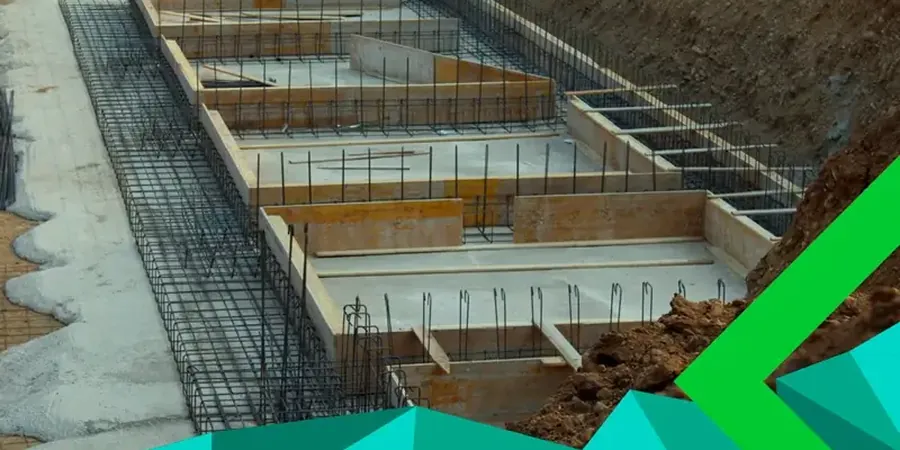
We size isolated and continuous footings per ACI 318, including reinforcement detailing for flexure and shear. For poor soils, we design rigid mat foundations that tolerate differential settlement while keeping the superstructure within serviceability limits.
Typical parameters
Frequently asked questions
What does a shallow foundation design cost for a typical Omaha residential lot?
For a standard single-family home on a typical Douglas County lot, a complete shallow foundation design including the geotechnical investigation and stamped report runs between US$1,630 and US$3,540. The range depends on the number of borings or test pits needed and whether lab testing for expansive clay is required. Commercial projects with larger footprints fall at the higher end or slightly above.
How deep do footings need to be in Omaha to avoid frost heave?
The IBC mandates a minimum 42-inch depth for footings in this climate zone. We typically specify 48 inches to provide a margin against extreme cold snaps, especially for unheated structures like detached garages. The critical factor is getting the bottom of the footing below the frost penetration depth and keeping the subgrade dry with positive drainage away from the foundation.
Can you design a shallow foundation on Omaha's loess without deep piles?
In most cases, yes. Stiff loess can handle two to three stories on conventional spread footings if the site is graded properly and the foundation drains are maintained. The exception is when we encounter saturated, collapsible loess thicker than five feet or very soft alluvial clay near the river. In those spots, we might recommend over-excavation and recompaction, a rigid mat, or a transition to deep foundations depending on the structural loads.