ASCE 7 and IBC Chapter 18 require a clear picture of subsurface water flow before any deep excavation or earth retention system goes in. Here in Omaha, perched water tables within the Peoria Loess and the deeper Missouri River alluvium create conditions where a standard lab perm won't tell the full story. The Lefranc test becomes essential when you need a reliable k-value at a specific depth in soil, while the Lugeon test quantifies fracture flow in the limestone bedrock beneath the city. Our field team runs these tests during geotechnical investigations so your dewatering plan isn't built on guesswork—it's backed by in-situ data collected right from the borehole. When the water table sits just 10 to 15 feet below grade in parts of Douglas County, getting the permeability wrong means a flooded excavation, period.
In-situ permeability data from a Lefranc or Lugeon test eliminates the 50% error margin common in lab-derived k-values for fractured or structured soils.
Methodology and scope
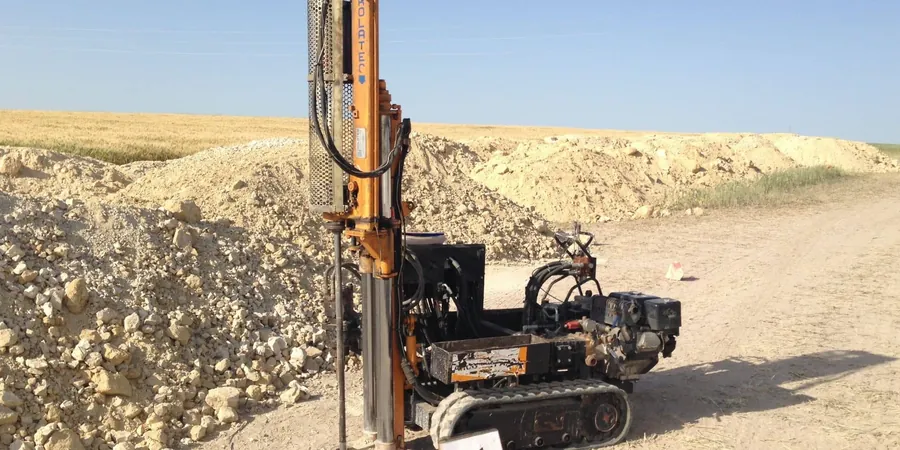
Local considerations
In Omaha, we often see contractors skip the field permeability test on a small commercial lot, run a quick lab perm on a remolded sample, and then wonder why the sump pumps can't keep up. The silt-size fraction in Peoria Loess collapses under saturation, so a remolded lab test gives a k-value that's totally unrepresentative of the structured, fissured material in place. We've walked onto sites where a 15-foot excavation through loess into alluvium hit a perched lens and turned into a slurry pit within hours. For any project that goes deeper than the seasonal high water table—think below-grade parking, elevator pits, or utility trenches—the Lefranc test is your cheapest insurance against a dewatering failure. And if you hit limestone above 40 feet, a Lugeon test tells you whether that rock is tight or whether you'll be pumping 50 gpm from a single fracture network.
Applicable standards
ASTM D6391-11 (Standard Test Method for Field Measurement of Hydraulic Conductivity Using Borehole Infiltration), ISRM Suggested Method for Lugeon Test (1988, with 2015 updates), IBC 2021 Section 1803.5.4 (Groundwater investigation requirements)
Associated technical services
Lefranc Variable-Head Test
Run in soil boreholes at discrete intervals. We use a slotted casing and gravel pack, measuring water level recovery with a pressure transducer. Ideal for loess and alluvial silts where you need a vertical k-value profile.
Lugeon Packer Test in Rock
Double-packer system isolating 3- to 6-foot intervals in bedrock. Five pressure stages per interval, with real-time P-Q plotting to detect fracture dilation, washout, or turbulent flow. Applied to the limestone and sandstone units beneath Douglas County.
Combined Permeability & SPT Drilling Program
A single boring yields SPT N-values, split-spoon samples for lab classification, and in-situ k-values from Lefranc or Lugeon stages. This integrated approach reduces field days and gives you a complete geotechnical model.
Typical parameters
Frequently asked questions
How much does a field permeability test cost in Omaha?
For a single Lefranc test at one depth interval, expect a range of US$680 to US$990. A full Lugeon profile with multiple packer settings in rock runs higher due to the specialized equipment and longer field time.
When is a Lugeon test required instead of a Lefranc test?
A Lugeon test is used in rock, specifically to measure hydraulic conductivity of fractures and joints. In Omaha, once the boring hits competent limestone—typically between 40 and 80 feet—we switch from Lefranc in the overburden to Lugeon in the bedrock. The Lugeon test uses a packer to isolate a section of borehole and applies water under pressure in five stages, following the ISRM suggested method.
What's the difference between a field permeability test and a lab permeability test?
The main difference is sample disturbance and scale. A lab perm test on a remolded sample—such as the falling-head test per ASTM D5084—measures the matrix permeability of a small cylinder of soil. A field test like the Lefranc measures the bulk permeability of the formation in place, including the effects of fissures, root holes, sand seams, and other secondary permeability features that control actual groundwater flow.
How long does a Lefranc test take?
At one depth interval, a variable-head Lefranc test typically takes 45 to 75 minutes, depending on soil permeability. Low-permeability silts require longer equilibration times. We monitor the water level with an automated transducer to capture the full recovery curve.